
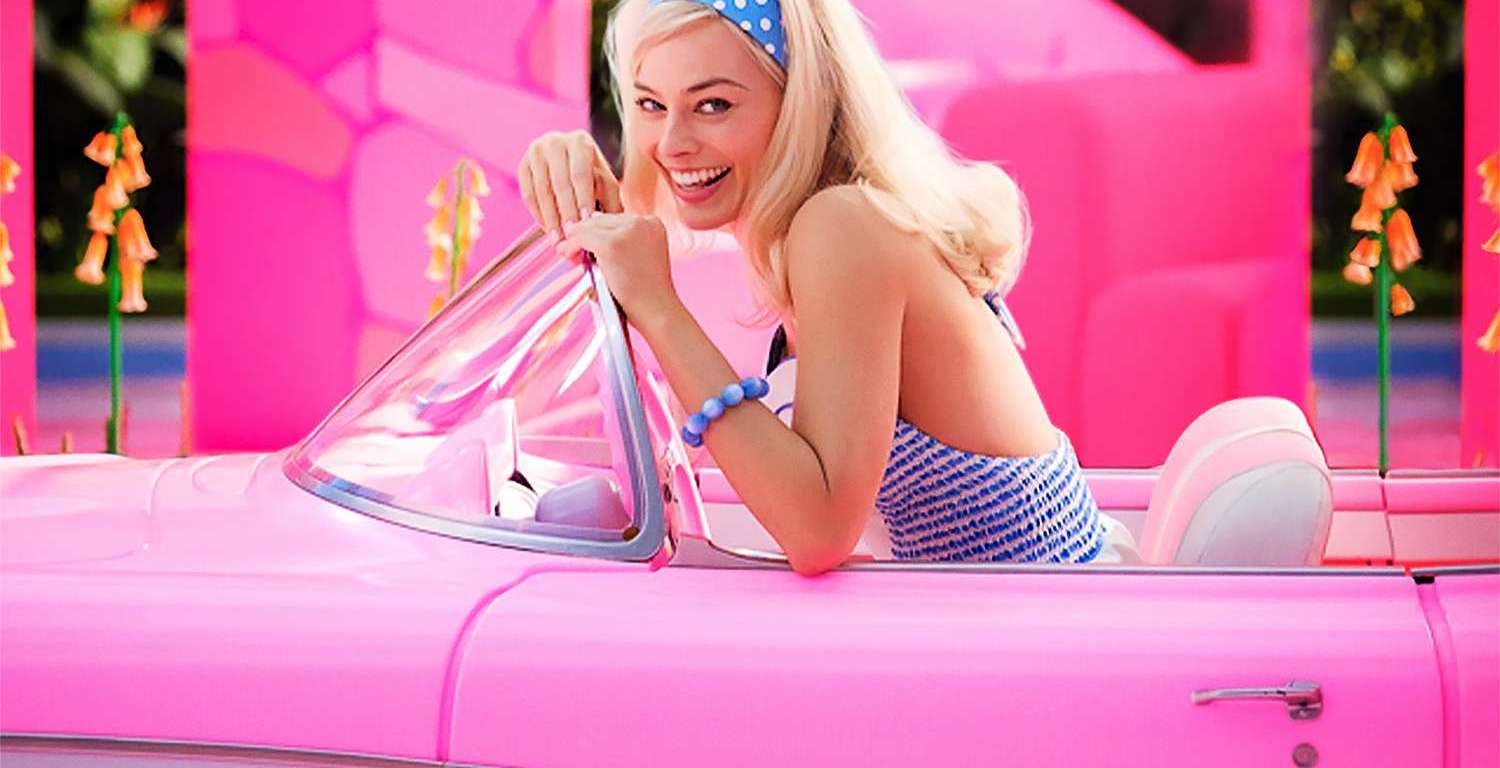
I’m sure by now most of you have heard of Barbie and the Barbie movie. For a little while it was like you couldn’t escape it with seemingly every major news network covering the film, praising it and its impact.
I’m one of those people that is always skeptical when a piece of media receives such widespread attention whether it’s positive or negative. When possible, I’ll normally wait until the hype dies down and dive into it much later. I guess I like to think this helps me head into something like a film with a clear head free of the public chatter and opinions of others, but with a film like this it’s damn near impossible to do that anyway.
Barbie was recently added to Netflix, one of the only remaining subscriptions I have access to, so I now had an opportunity to check it out.
The main takeaways from the media frenzy I could recall heading into it were overwhelmingly positive; a fabulously directed and produced film of which Greta Gerwig deserves the utmost praise; Margot Robbie shines as Barbie and Ryan Gosling as goofy but loveable Ken, and the messaging presented in the movie directed pointedly at women and girls to help understand and dismantle the patriarchy were… chefs kiss.
That’s what everyone was saying about it anyway.
Could it really have been that good? After all, it was Barbie.
I love films and pop culture so I went into it with an open mind. I can watch almost anything at least once, even if it’s absolutely awful like that new flick No Hard Feelings with Jennifer Lawrence. Fucking terrible, I don’t recommend it at all. But I sat through the damn thing even though I wanted to turn it off a few times. Anyway, we can get into that some other time, maybe, but it’s almost not even worth any further attention.
Back to Barbie.
Barbieland
The first thing about the Barbie movie that I found really striking is the beautiful colours in Barbie world. It really helps transport you into this carefree magical land where Barbie and her squad of super-women of all varieties rule the coop and anything you dare dream is possible. It’s mesmerizing in itself, so kudos to the team that put the work into that and undoubtedly slaved away to perfect those stunning hues.
The attention to detail overall really stepped this film up a notch. You can’t help but giggle at Barbie as she slips out of her heels and notice her feet stay angled (just like a real Barbie!) or how when she pours a cup of milk, nothing really comes out of the carton. It’s cute and silly and if it went over this well with me, a woman nearing her mid-30’s, then I can definitely appreciate how well it went over with a bunch of young kids in the theatre.
For world-building and immersing the audience in the culture of that world, Barbie gets a 10/10.
Characters
I have to admit, my own knowledge of Barbie prior to watching this film is not very deep. Sure, I had a couple Barbie’s a young girl, or rather, my sister did that I could borrow from time to time, but I wasn’t a girl who was actively playing with them regularly or super interested in much more than what we had. What we had was stereotypical Barbie, Ken and Skipper. We also had a little Barbie house, that cool pink convertible and some accessories, but nothing else that I can really remember.
So I loved learning about all the different Barbies and the way they were able to incorporate discontinued editions and the reasoning behind those decisions. And Weird Barbie? Hilarious! What a clever way to talk about the funny way kids “overplay” with their dolls and toys and the tragic repercussions of that type of behaviour. This movie is smart as hell and I don’t recall enough people talking about these quirky important details when it was in theatres.
But they sure did talk about Ken.
Or I guess I should say, the Ken’s.
Recalling that Ryan Gosling won an award for one of the musical numbers in this film, I had high expectations for his role. Like most of you I sort of have high expectations of him in general; Gosling is a great actor and pretty well varied across the board, one of those people you can’t help but like. But my God is he ever insufferable in Barbie. And I get it, that’s sort of the point here – all of the Ken’s are hopelessly annoying in their own special aloof ways and for that, I suppose they all played their role well. But even when Ken… Gosling-Ken, is acting like a half brain-dead goofball it feels like, a little much, no?
I say this as someone who first was introduced to Gosling with Breaker High and if you’ve seen the show, you know that he really plays the doorknob role well. The Ken’s are frankly exhausting; Like they’re almost too unaware of who they are and their privleges lives, even for dolls. Yes I recognize how that sounds. Of course, they are good for a couple chuckles here and there.
There’s a certain theory that the only reason Gosling was awarded for his role was to cause controversy given the scope of the film and I have to say, that makes the most sense here, so I’m inclined to believe it.
No hard feelings, Ryan.
The Messaging
Okay, I have to move on to why this film really matters; The messaging.
I was thrilled about the praise the film received when it came to its positive messaging for women and girls because if there is something we need more of in this world – the real world – it’s that. But we also live in a world where Taylor Swift is praised by an alarming amount of people for being a great lyricist and if you choose to challenge that (yeah, we’ll get to it later), you are somehow villainized as not being a feminist, so when I take the moment to reflect that the praise of this films’ messaging comes attached to the legacy of Barbie, I had to again begin with skepticism.
When people are passionate about a brand or topic (especially when that brand is a person), it is tough to see anything to criticize. I believe this to be true across all brands, art forms and industries. You grow blind to anything perceivably negative because we as people take some weird ownership over the people and things that we love; To see fault in them then becomes oddly personal and might require too much introspection than we’re willing to give to it.
So I want to further explain my own personal experience with Barbie.
As I said, we did have a couple Barbie’s when I was a young girl and on occasion I would play with them. What I remembered of this time is that I liked putting her in the big pink convertible car and cruising that car around the floor of our family’s cottage (that’s where we kept the Barbie toys) and taking her down to the lake for a swim, brushing her hair out afterward to ensure it didn’t become a tangled mess.
The other thing I remember is being… weirdly embarrassed every time I did play with her or Skipper. I almost never played with Ken. I’m not even sure my sister allowed him to be out of his box often enough for us to really play with him, she was pretty particular about her things.
The simple reason is that I was just not really a girly-girl – my sister was. My sister, I suppose you could say, was stereotypical Barbie, albeit with natural brown hair which she later dyed blonde. She loved women’s fashion, had long hair she could style, took part in a lot of activities often seen to be for women exclsuively and had a lot of good girl friends. She was also 9 years older than me, so quite literally years ahead of me in every way possible, but as her younger sister of course I looked up to her on some level.
The problem with that was I recognized from a very early age that we were not alike.
I had short hair; so short it couldn’t be styled (that was the point of my mom’s home-style bowl cuts – set it and forget it!) and I hated most of women’s fashion; frilly fabrics made my skin itchy and dresses or skirts made me feel exposed when I was playing sports or running around with my predominantly boy-based friend group.
My sister also treated me like a doll a lot of the time. I don’t blame her for it necessarily, but I didn’t care for it. She’d pluck me aside and set me on a stool to put my short hair into a top-pony and call me Pebbles and regularly bug me about if she could do my nails or put me in something. Because of my family dynamics, my sister often took care of me from a young age while my mom was out at work, so all of this was pretty normal for her. If you were 9 or 10 years old changing your sister’s diaper, I can see how you’d start to treat them like your own little Barbie doll.
If I reached for the Barbie instead of one of my brothers Teenage Mutant Ninja Turtles, I’d get annoying commentary from my sister about the fact that I was playing with the dolls. Because when you reached for a Barbie, the conversation became about her clothes and her hair and it all was very superficial, even at a time when I didn’t understand what that was.
When I played with the boys’ action figures or trucks, there never seemed to be any comments. It didn’t take long for me to figure that out, so I gravitated further and further to anything that wasn’t Barbie or similar in any way to more feminine dolls.
Barbie did not represent me.
And eventually I’d come to resent Barbie for that. Sure, Skipper was a little more sporty (and younger, like me!) but she still was a much more stereotypically feminine version of what a young girl “should be” and I hated it. Dolls, I determined, were stupid.
So, animal plush toys and Ninja Turtles it was. They fought crimes and worked together within large networks (we had a ton of random action figures compared to the family-affair that was Barbie, Ken and Skipper) and while Ninja Turtles might be presented as masculine with boys names, at the end of the day they are just turtles with bandanas who eat pizza (like me!) not salads (like my sister… and like, actual turtles).
All of these memories flooded back to me as I watched the Barbie movie and I came to better understand my own view of Barbie was so much deeper than just being a doll that I was embarrassed to play with.
I was embarressed of femininity. Of being perceived as a stereotypical woman. And I was only a young girl when I began to feel this way.
A Woman’s Perspective
It should be clear I’ve always been acutely aware of my femininity (or a lack there-of) and I’ve always understood myself to be a not-so typical representation of womanhood. It’s been challenging to navigate without the right female role models in my life and a lot of that comes down to what the Barbie movie is all about; patriarchy and its role in undermining my worth and potential.
When I finished the Barbie movie, I asked my sister if she had seen it.
“Oh, it’s terrible.”
What?!
She explained she had seen it a while back and that simply, she hated it.
My sister… the one who owned and cared for the Barbie’s and the collection of her accessories we owned with incredible precision for so many years, hated the Barbie movie?
I admit, it is a goofy film. If you’re not in the mood for the silliness of it, I can see how it wouldn’t be for everyone, but I couldn’t deny the incredibly positive messaging it carried with it from start to finish.
Of course, I asked her why.
“It’s too political.”
Ah.
Of course. I should have expected her to say so, but I thought maybe this film would be an exception to what I otherwise understand to be my sister’s perspective on the world as it pertains to women.
After all, it’s Barbie.
I began to explain that well, it sort of had to be because of what it was really made for. And as we spoke I began to wonder what a Barbie movie without the political arc would even look like. What would it even be about? Would it just be…. Would it just be Beach?
We talked about it briefly, but my sister was adamant that it was terrible. I tried to push the idea that I thought it was a great movie for girls and women (was I saying this? Woman Who Didn’t Like Playing With Barbies?) and that wasn’t enough for her, either.
I’d say 90% of the time, when my sister wears shoes they’re heels and that percentage would be firmly flipped when talking about myself and if you don’t know what that means, then I think you need to watch the Barbie movie.
My sister wouldn’t budge on her stance so I turned to my mom who was in the next room; she watches damn near everything so, it was worth asking if she’d seen it.
She hadn’t, but she said she’d give it a watch later.
The Barbie movie had reawakened this funny realization in myself about my own upbringing and I needed to solidify my theory about myself even though I was pretty sure I knew what my mom’s review would be.
The next day she approached me. “So, I watched it.”
And?
“Awful. Hated it. So stupid.”
Gutted! The two women in my life who have single handedly had the most significant impact on my upbringing as a woman both hated the Barbie movie. They had absolutely nothing positive to say about it.
I really need to reiterate that I did not care for Barbie, the doll, as a girl, and while I knew that over the years they had expanded the line to include “Dr. Barbie” and various other “Professional Barbie” iterations, I still looked at the brand as a dumb doll without much substance who cared too much about stereotypical beauty standards.
The Barbie movie flipped that whole brand on its head and made it cool to a now, much more self-assured and confident adult woman who understands the spectrum of gender and that society or a dress does not define my femininity.
But if both my mother and sister hated the film, what was I missing about it? I’m not sure I am the right person to answer that.
“Even Ryan Gosling was terrible,” my mom added to her review.
Well, at least we can both agree on that.
One More Piece of Popcorn
I now know I never hated Barbie. But boy oh boy did the construct of femininity really do a number on my self esteem and worldview.
Would I watch the Barbie movie a second time? I’m not sure I need to. I think I got all I could out of it and as much as I can appreciate and praise it now, it’s not exactly a film that requires repeated viewing even on a casual nature.
But if I had a young girl who wanted to see it, I would happily drive them to the theatre to see it or purchase a copy for them to watch it at home. And if they wanted to watch it repeatedly like I often did with kids films when I was young, I wouldn’t stop them. I’d want them to have the ability to soak in those messages because I’m not sure I can explain everything this film represents as well as this film did to its intended young audience.
And if they wanted to buy a Barbie, I’d be sure to show them the wide variety of Barbie that exists and allow them to find the one they see most in themselves and choose that one, instead of forcing traditional long-blonde-haired Barbie on them, even if she came with a cool convertible car.
And if they want Ken they can do some chores and save up for him themselves, because he is an accessory.


I get what you’re saying about Ken, but I also think “I’ll play the guitar at you” is a great line.
LikeLike
Haha, absolutely. They were not without their moments!
LikeLiked by 2 people